
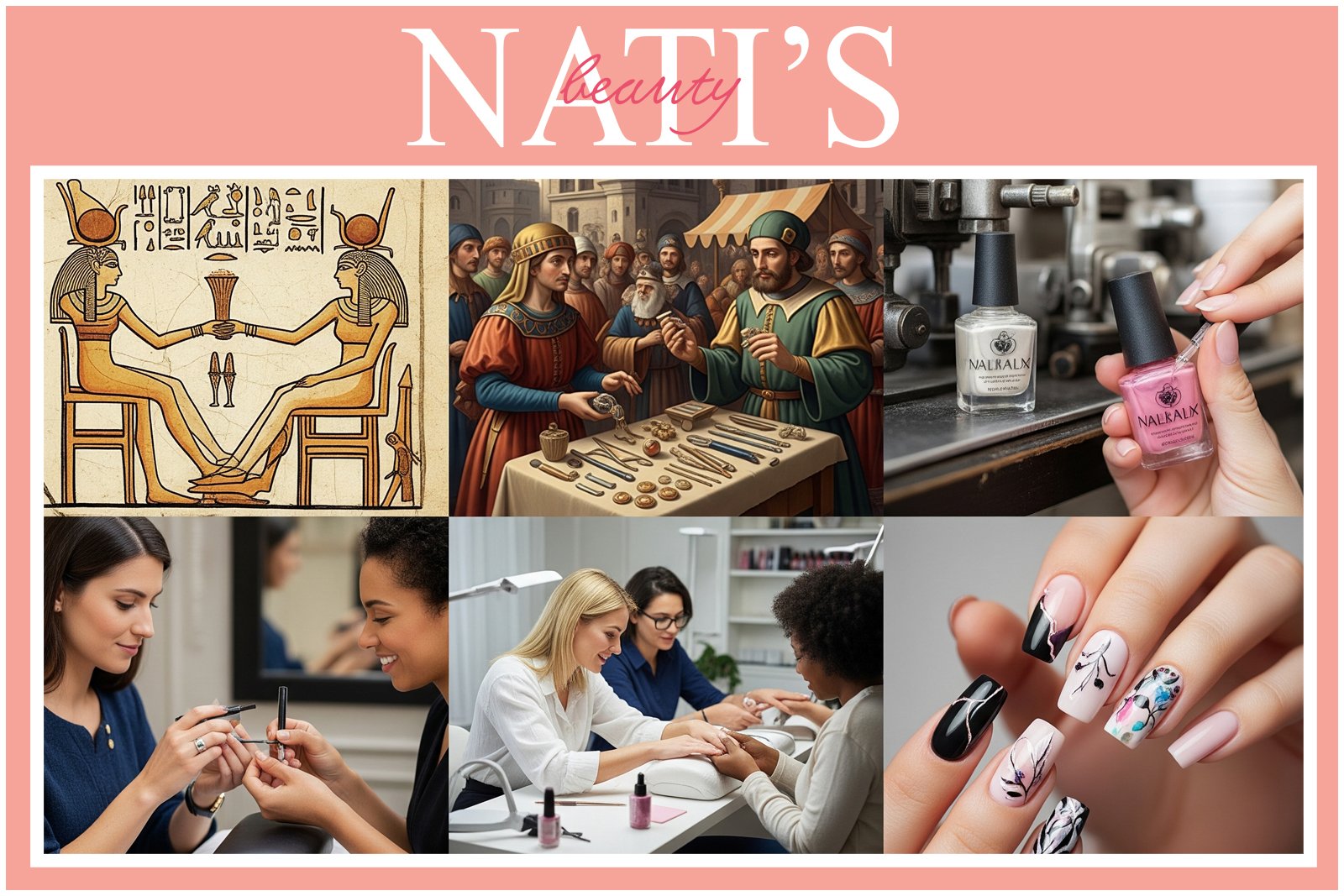
We often think of nail art as a modern beauty trend, but the truth is — people have been decorating their nails for thousands of years. The journey from natural dyes to high-gloss gels is fascinating.
Ancient China (around 3000 BC)
Nail color was a symbol of social rank. Royals wore gold, silver, red, or black — shades created from natural ingredients like beeswax, gelatin, and crushed flowers. The color you wore could literally say how powerful you were.
Ancient Egypt
Queen Cleopatra herself was known to stain her nails a deep red using henna. The darker the nail color, the higher the status — pale shades were reserved for commoners.
India & the Middle East
Henna wasn’t just for hair. It was used for intricate nail and hand designs, often as part of cultural ceremonies. These patterns were the first real form of nail art.
Medieval Europe & the Victorian Era
Nail care was minimal, but among the elite, grooming became more refined. Women used metal tools and orange sticks to shape and clean their nails — natural beauty was in style.
The 20th Century: The Beauty Boom
In the 1920s, the first modern nail polish was born — inspired by automotive paint! And in 1932, Revlon launched a revolutionary colored polish using pigments instead of dyes. This marked the beginning of nail color as mass-market beauty.
The 1970s–80s: Acrylics & Pop Culture
Acrylic nails entered the scene, and celebrities like Donna Summer and Madonna turned long, bold nails into a pop culture statement. Nail salons started booming.
2000s and Beyond
Gels, shellac, dip powders, 3D nail art, press-ons, chrome, minimalist designs — the options are endless. Social media platforms like Pinterest, Instagram, and TikTok turned nails into a global creative playground.
Today, the nail industry isn’t just about beauty — it’s about expression, identity, and even art. From ancient rituals to futuristic tech, nails have always told a story.
And honestly? We’re just getting started.